Why Your Ogden AC Struggles During a Heatwave and When to Call HVAC Service in Ogden UT
Why Your Ogden AC Struggles During a Heatwave and When to Call HVAC Service in Ogden UT
When a July heatwave settles over Weber County, many homeowners start searching for air conditioning service Ogden UT after the system that seemed fine in June suddenly cannot keep up. That pattern is common across central Ogden, the East Bench, Roy, South Ogden, and even up toward Huntsville. A cooling system can run all day and still leave rooms warm, sticky, or uneven. In many cases, the problem is not one single part. It is the way heat, airflow, equipment condition, refrigerant performance, duct design, and home layout all collide when outdoor temperatures spike for several days in a row.
Heatwaves expose weaknesses that stay hidden during milder weather. A system that can hold 74 degrees on an 88 degree afternoon may start drifting to 79 or 80 when temperatures move into the mid 90s and the sun bakes west-facing windows, attic insulation, and duct runs. That is why experienced contractors treat air conditioning service Ogden UT as more than a quick glance at the thermostat. They look at the full cooling process, from the outdoor condenser to the indoor evaporator coil, blower performance, refrigerant charge, return air conditions, and the pressure inside the duct system.
Why heatwaves hit Ogden homes harder than many owners expect
Ogden is not one uniform cooling market. Homes near the valley floor around 84401 and 84404 behave differently from homes on the East Bench in 84403, and both behave differently from properties in the Ogden Valley near 84317. Elevation changes, sun exposure, wind, insulation levels, and house age all affect how hard an AC must work. A brick rambler in Washington Terrace may absorb and hold daytime heat differently than a newer two-story home in Pleasant View. A split-level in Roy near 84067 may struggle with hot upstairs bedrooms because of duct balancing and solar gain, even when the equipment itself still runs.
One locally important fact stands out. Proper HVAC sizing in Northern Utah should be based on a Manual J load calculation, which means a room-by-room measurement of how much heating and cooling a house actually needs. That calculation should reflect whether the home sits on the Ogden valley floor, on the East Bench, or higher in the Ogden Valley. The same floor plan does not carry the same load in all three settings. That is a shareable point because many comfort problems start when an older system was matched to the previous unit instead of being recalculated for the home as it exists now.
During a heatwave, the margin for error disappears. A unit that is slightly low on refrigerant, slightly dirty, or slightly oversized can still cool acceptably on moderate days. Once temperatures surge, those small issues become large ones. Homeowners then notice longer run times, warm air from some vents, or a thermostat that never reaches the set point.
What “struggling” usually looks like in a real Ogden home
Most cooling failures do not begin with a total shutdown. They begin with warning signs that many homeowners brush aside for a week or two. In neighborhoods around Weber State University, Historic 25th Street, North Ogden, Riverdale, and Layton, the same symptoms come up again and again:
- The system runs constantly in the afternoon
- Air from the vents feels weaker than usual
- Upstairs rooms stay hot while the main floor feels passable
- The outdoor unit sounds louder or starts and stops too often
- Indoor humidity rises and the home feels clammy
These are not random complaints. They each point toward a short list of likely mechanical or airflow issues. Constant run time may mean the system is operating normally but is undersized for the actual load, or it may mean the coil is dirty, the refrigerant charge is off, or the ductwork is leaking conditioned air into an attic or crawlspace. Weak airflow often traces back to a clogged filter, matted evaporator coil, failing blower motor, or crushed return duct. Hot rooms can indicate poor duct design, poor balancing, or inadequate return air pathways. Short cycling, which means rapid on and off operation, often shows up with oversized equipment, electrical faults, or airflow restrictions that drive pressures out of range.
Dirty condenser coils are a major heatwave problem
The outdoor condenser coil is where heat leaves the home. If that coil is coated with dust, cottonwood, lawn debris, or grime, the system cannot reject heat properly. On a normal day the unit may limp through. On a 95 degree afternoon, the same buildup can push operating pressures high enough to reduce cooling output fast. This is one of the most common reasons people call for air conditioning service Ogden UT once a heatwave begins.
This issue shows up often along busy roads and in newer subdivisions where construction dust lingers. It also appears in homes near open fields in Farr West, Plain City, Hooper, and West Haven where wind carries fine debris into the coil. When the coil cannot shed heat, the compressor works harder, energy use climbs, and supply air inside the home gets warmer. In severe cases, the system can trip on high pressure safety controls.
Airflow problems often matter more than homeowners realize
Cooling is not just about cold refrigerant. It is about moving the right amount of air across the indoor coil and through the house. A blower that is weak, a filter that is too restrictive, or ducts that were never designed well can make a functioning AC feel broken. In professional terms, a contractor may evaluate static pressure, which means the resistance the blower is fighting inside the duct system. High static pressure can reduce delivered airflow, increase noise, and leave distant rooms uncomfortable.
Older homes in Ogden and South Ogden often have duct systems that were modified over time. Basements were finished. Returns were added in a hurry. Supply branches were pinched to fit around framing. Those changes may not matter much in spring. In a heatwave, they become obvious. A proper diagnosis for air conditioning service Ogden UT should account for the duct system, not just the condenser outside.
That is where Manual D becomes relevant. Manual D is the duct design method used to size and lay out ductwork for the airflow a system needs. Homeowners do not need to know every formula, but they should know this much: an excellent air conditioner still cannot perform well through a poor duct system. When one bedroom over the garage in 84403 is always warmer than the rest of the house, that is often a duct and air distribution problem, not a thermostat problem.
Low refrigerant is rarely “just a recharge”
One of the most misunderstood cooling issues during a heatwave is low refrigerant. Refrigerant does not get used up like gasoline. If a system is low, there is usually a leak. The technician’s job is not simply to add more and leave. The technician should evaluate why the charge dropped, inspect for leak points, and determine whether repair makes sense based on system age, coil condition, and refrigerant type.
That matters even more now because the equipment market changed on January 1, 2025. Systems installed before that date commonly use R-410A. New equipment uses R-454B, a lower global warming potential refrigerant. That does not mean every older R-410A system must be replaced. It does mean replacement decisions now sit inside a real transition period. If a major leak appears in an older system during a heatwave, owners should weigh repair cost, component availability, and system age against replacement timing instead of assuming a refill solves the problem long term.
Any refrigerant work also carries federal handling requirements. EPA Section 608 rules govern refrigerant recovery and handling, which is one reason this is not a corner-cutting service. Reliable air conditioning service Ogden UT should include proper leak diagnosis and lawful refrigerant practices, not guesswork.
Why an AC freezes when it is hot outside
Homeowners are often surprised to hear that an air conditioner can ice up during extreme heat. A frozen evaporator coil usually means one of two things. The system has low airflow, or it has a refrigerant issue. Sometimes it has both. Warm household air must move across the coil to keep temperatures in the right range. If airflow drops too low because of a dirty filter, dirty coil, blower issue, or blocked duct, the coil can get too cold and begin forming ice. Once that starts, cooling falls apart.
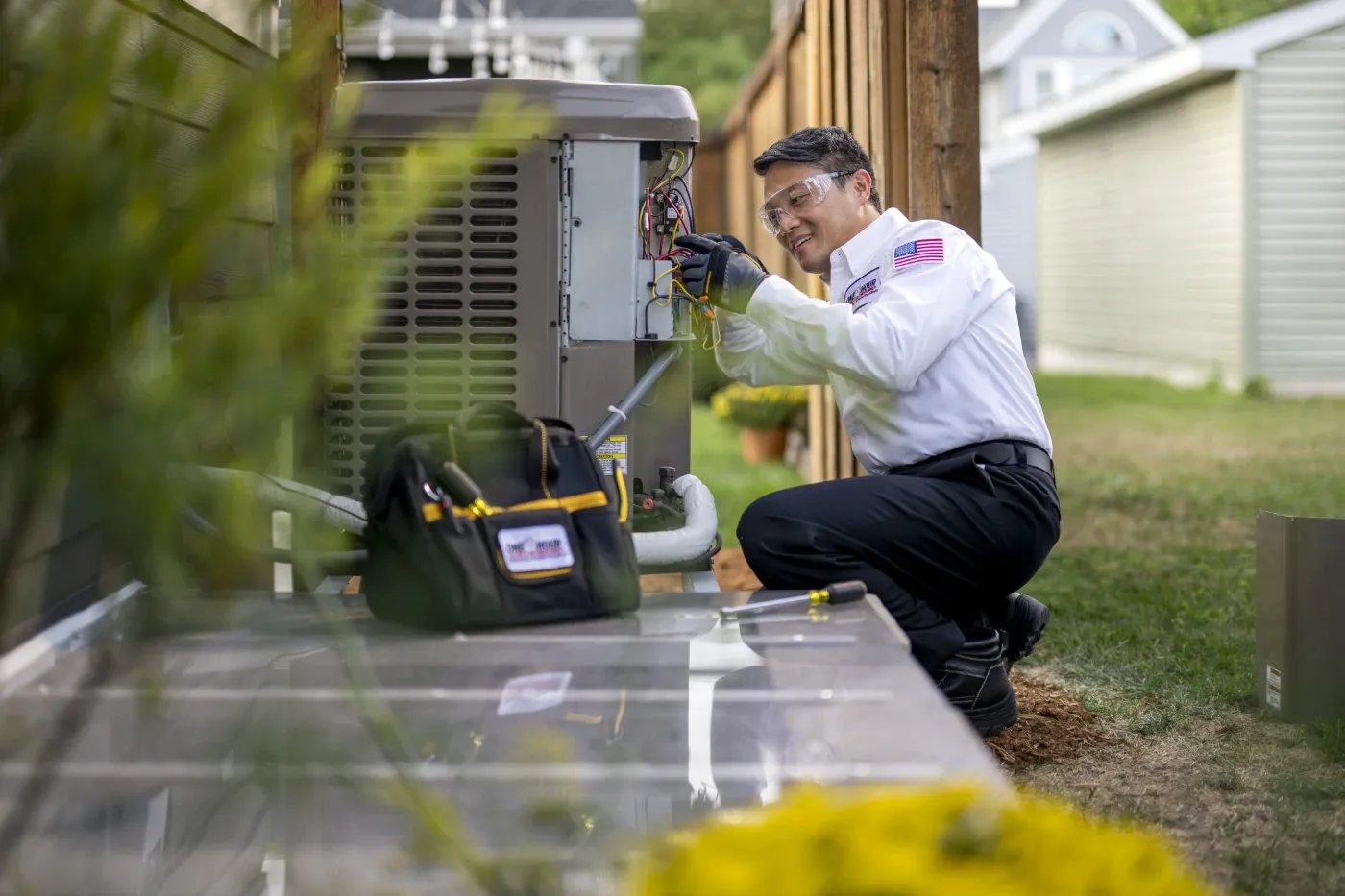
In practical terms, the home may feel warmer and warmer even though the system never stops running. Some rooms may get almost no airflow at all. If the ice continues to build, liquid refrigerant can return where it does not belong, which can damage the compressor. That is one of the clearer moments when air conditioning service Ogden UT should be called quickly instead of waiting through the weekend.
Electrical failures love the first real heatwave
Electrical components often fail at the exact moment the system starts running hardest. Capacitors and contactors are common culprits. A capacitor helps motors start and run. A contactor is the switch that tells the outdoor unit to turn on. Both parts wear over time. During the first serious stretch of heat, weak components finally cross the line.
The pattern is familiar across homes near McKay-Dee Hospital, neighborhoods off US-89, and subdivisions around Clearfield and Layton. The indoor fan may run, but the outdoor unit stays silent. Or the system starts, hums, and shuts back off. Sometimes the breaker trips. Sometimes the thermostat appears normal while the house warms by the hour. Because electrical symptoms can resemble each other, diagnosis matters. The right service call confirms whether the real issue is a failed capacitor, burnt contactor, weak blower motor, damaged wiring, or a failing compressor drawing improper amperage.
Oversized systems can struggle too
Many homeowners assume bigger always means better. In cooling, that is often false. An oversized air conditioner can short cycle, which means it cools quickly for a few minutes, shuts off, and starts again soon after. That may sound harmless, but it causes poor humidity control, uneven temperatures, and extra wear on motors and controls.
Short cycling shows up often when a replacement was installed years ago based on the size of the old unit instead of a fresh Manual J calculation. It is especially common in homes that later added better windows, more attic insulation, or air sealing. The house load changed, but the equipment did not. During a heatwave, short cycling can leave the home feeling muggy and unstable rather than truly cool.
That is why strong air conditioning service Ogden UT includes a repair-versus-replace conversation when symptoms point to a sizing problem rather than a simple broken part. If replacement enters the picture, equipment selection should move into Manual S, which is the process used to choose equipment that matches the load calculation and airflow target.
The house itself may be part of the problem
An AC system can only remove heat that the home allows in. In Ogden heatwaves, west-facing glass, poor attic ventilation, thin insulation, recessed lights open to the attic, and unsealed return chases all add load. Homes near Ben Lomond’s foothill exposure and homes with broad afternoon sun can see major room-to-room differences. It is not unusual for a bedroom on the west side of the house to run several degrees warmer than a shaded room on the north side.
That does not mean the air conditioner is blameless. It means a serious diagnosis considers building conditions too. Technicians with BPI certification, which stands for Building Performance Institute, are trained to see how the house and the HVAC system affect each other. That can be useful when a unit keeps testing “mostly fine” yet comfort stays poor.
What changes when the problem is in the Ogden Valley
Cooling behavior in Huntsville and the Pineview Reservoir corridor is different from cooling behavior in central Ogden. Nights may be cooler, but elevation, solar exposure, home size, and shoulder-season equipment choices change the equation. A home that relies on a heat pump up there may perform very differently across the year than a gas furnace and AC pairing on the valley floor. In cooling season, the same principles still apply: proper sizing, airflow, refrigerant charge, and duct performance. The difference is that many mountain-adjacent homes have larger glass areas and more varied floor plans, which can make zoning and air distribution more important.
When repair is sensible and when replacement should be considered
Not every struggling AC needs replacement. Many systems recover well after coil cleaning, capacitor replacement, contactor replacement, blower repair, condensate clearing, or leak repair. But there are times when replacement deserves a serious look. These include repeated breakdowns, an aging R-410A system More helpful hints with a major coil leak, a compressor issue on older equipment, or clear evidence that the current setup was poorly sized from the start.
In those cases, the discussion should not center only on the box outside. It should include blower compatibility, duct capacity, thermostat control, return air, and installation standards. Features like two-stage cooling or variable-capacity inverter operation can help some Ogden homes hold steadier comfort during prolonged heat, especially in homes with fluctuating loads through the day. An ECM blower, meaning an electronically commutated motor that adjusts airflow more precisely than older motor types, can also improve circulation and comfort when matched correctly. Exact efficiency minimums should be confirmed against current Utah requirements rather than assumed from old sales language.
Mechanical permits matter too. Full system replacement in Utah typically requires a permit and code-compliant installation work. Homeowners comparing bids should ask whether a permit is included and whether the company works under the appropriate Utah DOPL specialty contractor framework for HVAC, commonly classified as S350. The state license number should be verified directly rather than accepted from memory or marketing copy.
Why same-day discomfort turns into indoor air quality problems
When cooling airflow falls, filtration suffers too. That matters in Northern Utah because indoor air quality is a real concern for many households, especially families sensitive to dust, dander, and seasonal pollution. While the worst outdoor particulate episodes happen during winter inversions, weak summer airflow still means less effective filtration and more stuffy indoor conditions. If a home already has restricted returns or an overloaded filter setup, a heatwave can make the air feel stale as well as warm.
For winter context, Weber and Davis County residents live with a documented particulate issue from December through February. The EPA 24-hour PM2.5 standard is 35 micrograms per cubic meter, and valley-floor readings on the Wasatch Front can exceed that during inversion periods. That fact matters because homeowners making HVAC decisions often do best when they think beyond cooling alone. The right airflow, filter cabinet, and duct condition affect comfort all year, not just on the hottest day in July.
When to call instead of waiting another day
Some problems can wait for a scheduled visit. Others should not. A service call is usually warranted quickly when any of the following is happening:
- The AC runs but indoor temperature keeps rising
- The outdoor unit will not start or keeps tripping the breaker
- Ice is visible on the refrigerant line or indoor coil area
- There is little to no airflow from multiple vents
- The system starts and stops every few minutes
In a heatwave, delay can turn a smaller repair into a larger one. Frozen coils can stress compressors. Airflow issues can overheat motors. Low refrigerant can damage major components if allowed to continue. That is why homeowners searching air conditioning service Ogden UT are usually right to act once the house can no longer maintain a safe, stable indoor temperature.
What a strong diagnostic visit should actually cover
A proper cooling diagnostic should be more than a quick part swap. The technician should verify thermostat operation, inspect the air filter, evaluate blower condition, inspect indoor and outdoor coils, test electrical components, measure temperature change across the coil, assess refrigerant conditions, and look at drainage and airflow. If comfort complaints involve one area of the home, duct layout and balancing should enter the conversation. If the issue keeps returning, system age, refrigerant type, and overall design should be reviewed.
That full-picture approach matters in Ogden because homes vary so much by age and neighborhood. A 1950s ranch in 84415 does not behave like a newer home in West Haven. A house near I-15 with more dust loading does not behave like a foothill property off the East Bench. Calling for air conditioning service Ogden UT should lead to a diagnosis that reflects those local conditions, not a one-size-fits-all script.
Local conditions that make professional judgment matter
Northern Utah cooling service is local work. Afternoon sun angles, elevation changes, and construction styles differ across Weber and Davis County. A company familiar with the corridor from Ogden to Layton and Clearfield understands that a home near Hill AFB may face different dust, load, and occupancy patterns than a HVAC Ogden property near Snowbasin turnoff or Pineview Reservoir. That local knowledge shows up in better decisions about whether the true issue is refrigerant, airflow, insulation, duct leakage, controls, or equipment selection.
It also shows up in replacement timing. The R-454B transition changed the market after January 1, 2025. Owners of older cooling equipment now benefit from technicians who can explain what that means in plain language without turning every repair into a forced sale. Some systems are still good repair candidates. Some are not. The difference depends on test results, not pressure.
Choosing the right company when the heat will not let up
When a home is heating up fast, homeowners still need to verify who they are calling. Utah licensing, bonding, and insurance status matter. So does whether the company can explain findings clearly and provide pricing before work begins. Cooling work should not rely on guesswork, and replacement recommendations should make room for proper load calculation, permit handling, and discussion of duct and airflow impacts. In this market, a contractor’s familiarity with Weber County, Davis County, and the Ogden Valley is part of the value.
For property owners who need air conditioning service Ogden UT during a heatwave, One Hour Heating & Air Conditioning of Ogden serves the local market as an independently owned and operated franchise led by Matt McFarland. The company serves Ogden, Roy, Riverdale, North Ogden, South Ogden, Layton, Clearfield, Huntsville, and surrounding communities with 24/7 emergency availability. Its technicians hold EPA, RMGA, and BPI certifications, and the company states that it is Utah Licensed, Bonded, and Insured. Near the end of a hard summer day, those details matter because response time and diagnosis quality matter.
Homeowners who want air conditioning service Ogden UT from a company that knows the local climate can call One Hour Heating & Air Conditioning of Ogden at (385) 485-6550. The company backs service with the Always On Time Or You Don’t Pay A Dime guarantee, offers StraightForward Pricing before work begins, and stands behind materials, labor, and craftsmanship with a 100 Percent Satisfaction Guarantee for up to two years from service. With 568+ Google reviews and a live 5-star reputation, One Hour Ogden is positioned to help when an Ogden heatwave shows exactly where an AC system is falling short.